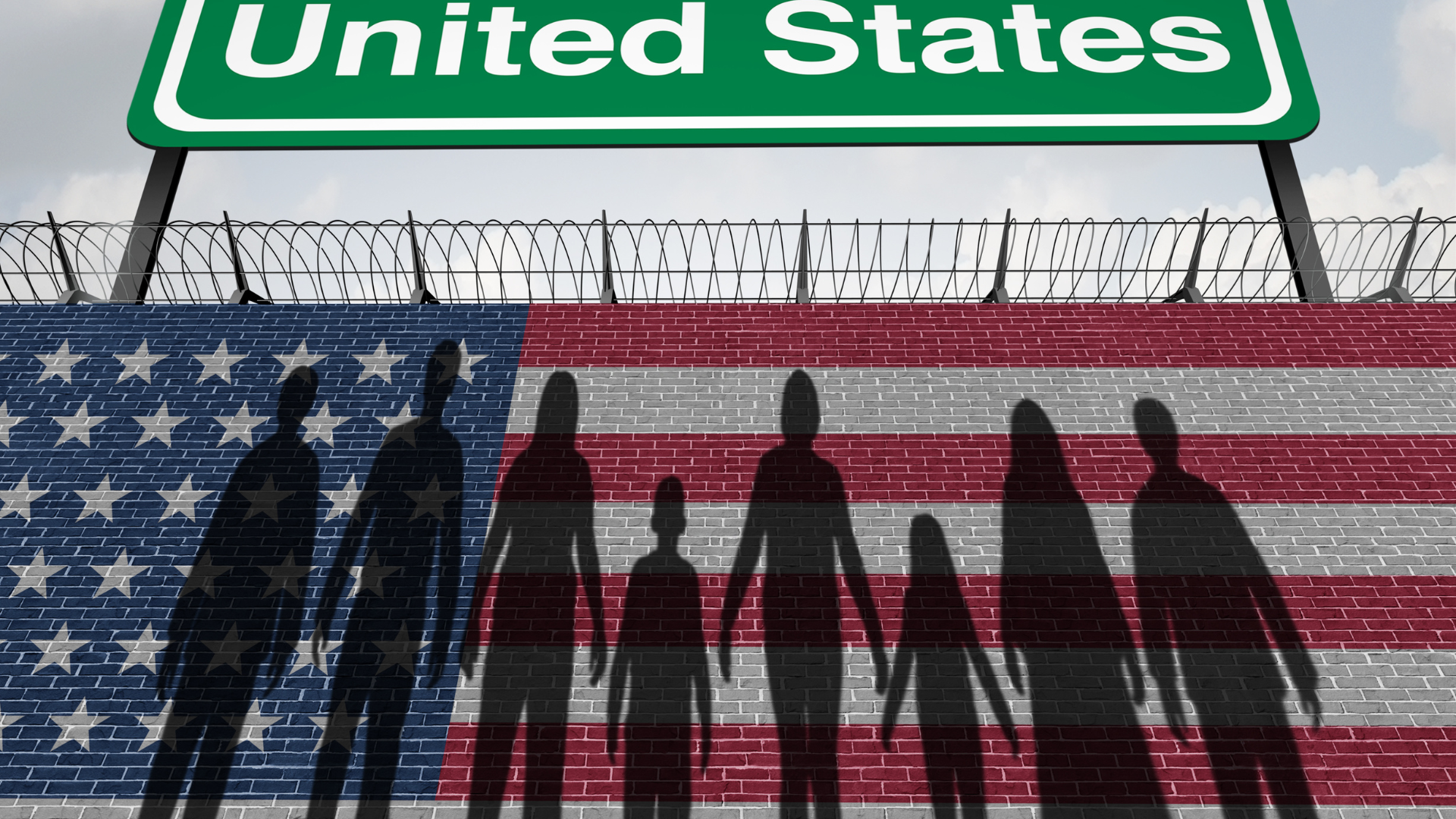
As Donald Trump prepares to begin a second term in the White House in 2025, the future of immigration policy in the United States could be shaped by sweeping reforms and controversial legal strategies. Central to his agenda are plans to deport 11 million undocumented immigrants, end birthright citizenship, revoke citizenship from naturalized individuals, and dismantle the Deferred Action for Childhood Arrivals (DACA) program. Below, we examine these proposals, their feasibility, and their potential impacts.
Can Trump Deport 11 Million Undocumented Immigrants?
Trump has pledged to carry out the largest mass deportation in U.S. history, targeting approximately 11 million undocumented immigrants. His plan includes declaring a national emergency, using the military for logistical support, and significantly expanding detention centers. However, this initiative faces serious obstacles:
- Immigration Court BacklogWith over 3.7 million pending immigration cases, the system is already overburdened. Adding millions more could extend case processing times by up to 16 years.
- Costs: Experts estimate that mass deportations would cost taxpayers between $150 billion and $350 billion, covering expenses such as hiring additional judges, constructing detention facilities, and funding enforcement operations.
- Legal ChallengesTrump has signaled he may invoke the Alien Enemies Act of 1798, a rarely used statute designed for wartime powers. Its applicability to immigration enforcement is untested, and its use would likely trigger constitutional challenges.
- Diplomatic IssuesSome countries have historically refused to accept deportees, complicating repatriation efforts.
Targeted groups could include undocumented individuals with criminal records, beneficiaries of Temporary Protected Status (TPS), and DACA recipients. The broad scope of this plan risks destabilizing immigrant communities, disrupting family units, and impacting sectors reliant on immigrant labor.
What the Law Says:
- Legal Powers: The president can direct federal agencies to enforce immigration laws more aggressively. Through its existing statutory powers, the Department of Homeland Security (DHS) could prioritize deportations, but scaling up enforcement to this level would face logistical and legal hurdles.
- Limits: Deportations require due process under the U.S. Constitution, meaning that each individual scheduled for removal must have their case heard in immigration court. The current backlog of over 3.7 million cases would make immediate mass deportation virtually impossible.
- Alien Enemies Act of 1798: Trump has suggested invoking this 18th-century law to expedite deportations. However, its use has been limited to wartime situations and would likely be challenged in court as unconstitutional when applied to peacetime immigration enforcement.
Can Birthright Citizenship Be Eliminated?
Ending birthright citizenship, enshrined in the 14th Amendment, would represent a seismic shift in U.S. immigration policy. Trump has proposed issuing an executive order to reinterpret the Citizenship Clause, which grants citizenship to anyone born on U.S. soil, regardless of their parents’ immigration status.
If implemented, this measure would:
- Deny essential documents, such as Social Security cards and passports, to the children of undocumented immigrants.
- It would affect nearly 4 million children living with at least one undocumented parent, leaving them in legal limbo.
- They face immediate legal challenges, as constitutional scholars argue that birthright citizenship is unequivocally protected under the 14th Amendment.
This proposal raises questions about the scope of executive power and whether it can unilaterally override constitutional guarantees. If implemented, it would likely polarize public opinion and further complicate the national immigration debate.
What the Law Says:
- Legal Powers: The president can issue executive orders directing federal agencies to limit certain benefits. However, these actions would not alter the constitutional guarantee of birthright citizenship.
- LimitsThe 14th Amendment explicitly guarantees citizenship to all individuals born in the U.S., and any attempt to reinterpret or override this would face immediate and significant legal challenges. Only a constitutional amendment, requiring two-thirds approval in Congress and ratification by three-fourths of the states, could eliminate birthright citizenship. With a divided Congress, it would be nearly impossible to ratify another amendment to the Constitution. The last time a new amendment was added to the Constitution was more than 30 years ago in 1992.
Revoking Citizenship from Naturalized Citizens
Trump’s team has proposed expanding efforts to revoke citizenship, targeting naturalized citizens for errors or omissions in their applications. These efforts could include:
- Administrative Errors: Reviewing past applications for technical errors or incomplete disclosures.
- Fraud Allegations: Revoking citizenship from individuals accused of making false statements during their naturalization process.
- Criminal Histories: Revoking the citizenship of those found guilty of undisclosed felonies that occurred prior to naturalization.
Denaturalization could set a troubling precedent, creating uncertainty for millions of naturalized citizens and undermining the permanence of citizenship. Civil rights advocates warn that this policy could disproportionately target minority communities and erode trust in the naturalization process.
What the Law Says:
- Legal Powers: The government has the authority to revoke the citizenship of citizens if they are found to have obtained citizenship through fraud, misrepresentation, or concealment of material facts. This process must be initiated through civil or criminal court proceedings and requires substantial evidence.
- Limits: Denaturalization cannot be applied retroactively to change the legal status of individuals who met the requirements at the time of naturalization. Minor administrative errors or changes in immigration standards cannot serve as grounds for revoking citizenship unless fraud or misrepresentation is proven. Furthermore, the Constitution prohibits the arbitrary or discriminatory application of denaturalization laws.
Removing DACA Protections
Trump has reiterated his intention to end DACA, a program that protects approximately 700,000 individuals—known as Dreamers—who were brought to the U.S. as children. Despite previous legal challenges that blocked similar efforts, the administration could attempt to dismantle the program through regulatory changes or legal appeals. (He recently said he would work to expand protections for DACA recipients, but the truth is that we don’t know what will happen yet.)
Ending DACA would:
- Strip Dreamers of their protections, exposing them to deportation.
- Disrupt the lives of thousands of young people who are integrated into U.S. communities, schools, and workplaces.
- It would negatively affect the economy, as many Dreamers are employed in essential industries or pursuing higher education.
Immigration advocates are preparing to challenge these efforts in court, emphasizing the program’s importance to individuals and communities alike.
What the Law Says:
- Legal Powers: As an executive action implemented by President Obama, DACA can be rescinded by a sitting president through an executive order. Trump attempted to do so during his first term, but the Supreme Court blocked the effort, citing procedural issues.
- LimitsEven if DACA were terminated, individuals would retain certain constitutional protections, such as the right to due process. Additionally, Congress has the power to pass legislation to provide permanent protections or a pathway to citizenship for Dreamers, which could override executive actions. However, this is unlikely under a Trump administration and would be difficult without a supermajority by a supportive party in Congress.
What’s Next for Immigrant Communities?
Trump’s proposed policies are expected to face fierce resistance from legal advocates, sanctuary jurisdictions, and civil rights organizations. These groups are already working to strengthen protections for vulnerable populations, provide legal resources, and challenge the administration’s actions in court.
Immigrants are encouraged to consult with legal professionals, understand their rights, stay informed about immigration news, and prepare for potential policy changes. With so much at stake for millions of individuals and families, the battle over immigration policy in 2025 promises to be one of the defining issues of Trump’s second term.