



- Evidence of having received lesser nationally or internationally recognized prizes or awards for excellence. These can include awards from national institutions or doctoral dissertation awards.
- Evidence that you are a member of an association in your field that requires members to have outstanding achievements
- Evidence of published material about you in professional or major trade publications or other major media outlets. Some examples of this include newspaper articles, textbooks, major online publications, or transcripts of professional or major audio or video coverage.
- Evidence that you have been asked to evaluate the work of others, either individually or as part of a panel. Eagan’s Senior Business Immigration Attorney, Hannah Whaley, explained in herwebinar on self-petitioningthat one example of this is a model or pageant queen being invited to judge a pageant for younger participants. Another example is a scientist or professor being invited to judge science fairs.
- Evidence of your original scientific, scholarly, artistic, athletic or business-related contributions of major significance to the field. Letters of support, patents, documentation that your work has been cited, and publications about the significance of your work can be used to fulfill this category.
- Evidence that you have written scholarly articles in professional or major trade publications or other major media
- Evidence that your work has been displayed at artistic exhibitions or showcases
- Evidence of your performance of a leading or critical role in distinguished organizations. USCIS explains that lead or critical roles include senior faculty or research positions; principals or heads of departments; and founders, co-founders, or contributors of a startup or distinguished organization.
- Evidence that you command a high salary or otherwise significantly high remuneration in relation to others in your field. You can provide tax returns, job offer letters, or documents that compare your wage to others in your field.
- Evidence of your commercial success in the performing arts. This includes volume of sales and box office receipts for a theater production, movie, or TV show.
The EB-2 Green Card
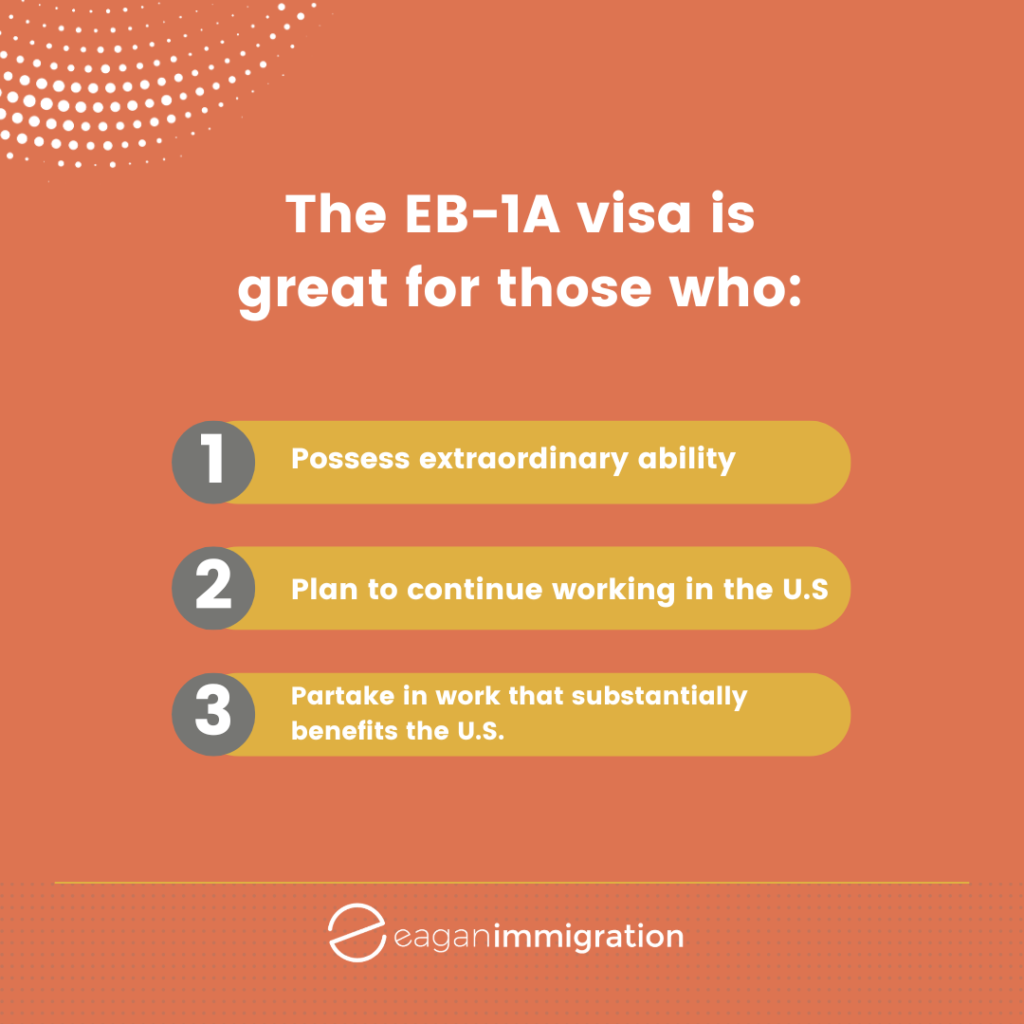
DACA and TPS recipients may also be eligible for the employment-based, second-preference (EB-2) green card. The EB-2 covers three categories:- Those who have an advanced degree
- Those who have a a bachelor's degree plus five years of postgraduate experience
- Those with exceptional ability in the sciences, arts, or business
- An academic record detailing your degree, diploma, or certification from a college, university, school, or other institution
- Letters of recommendation from current or former employers documenting at least 10 years of experience
- A license or certification to practice your profession
- Membership in a professional association
- Recognition of your achievements in your field by peers, government agencies, and/or professional or business organizations
- Evidence that you have earned a salary or other compensation for services that demonstrates your exceptional ability
The EB-2 National Interest Waiver
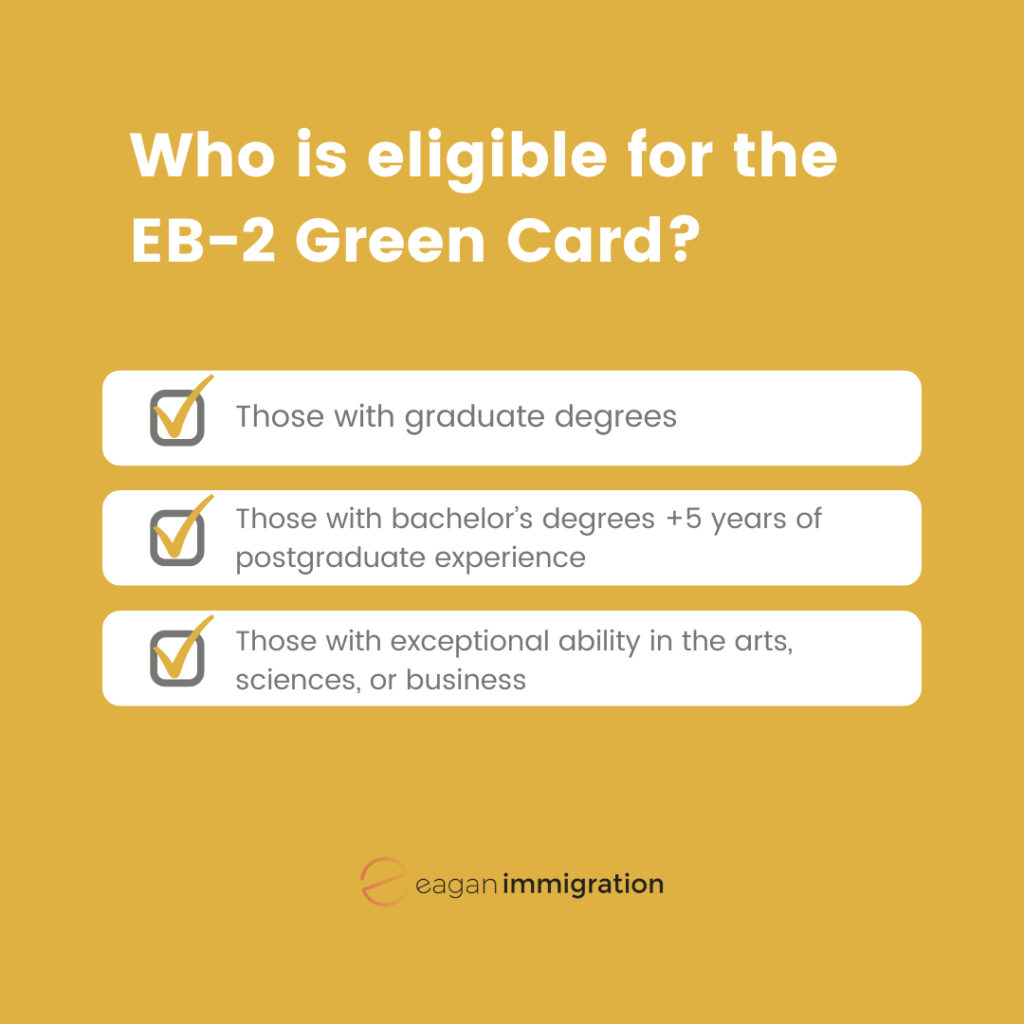
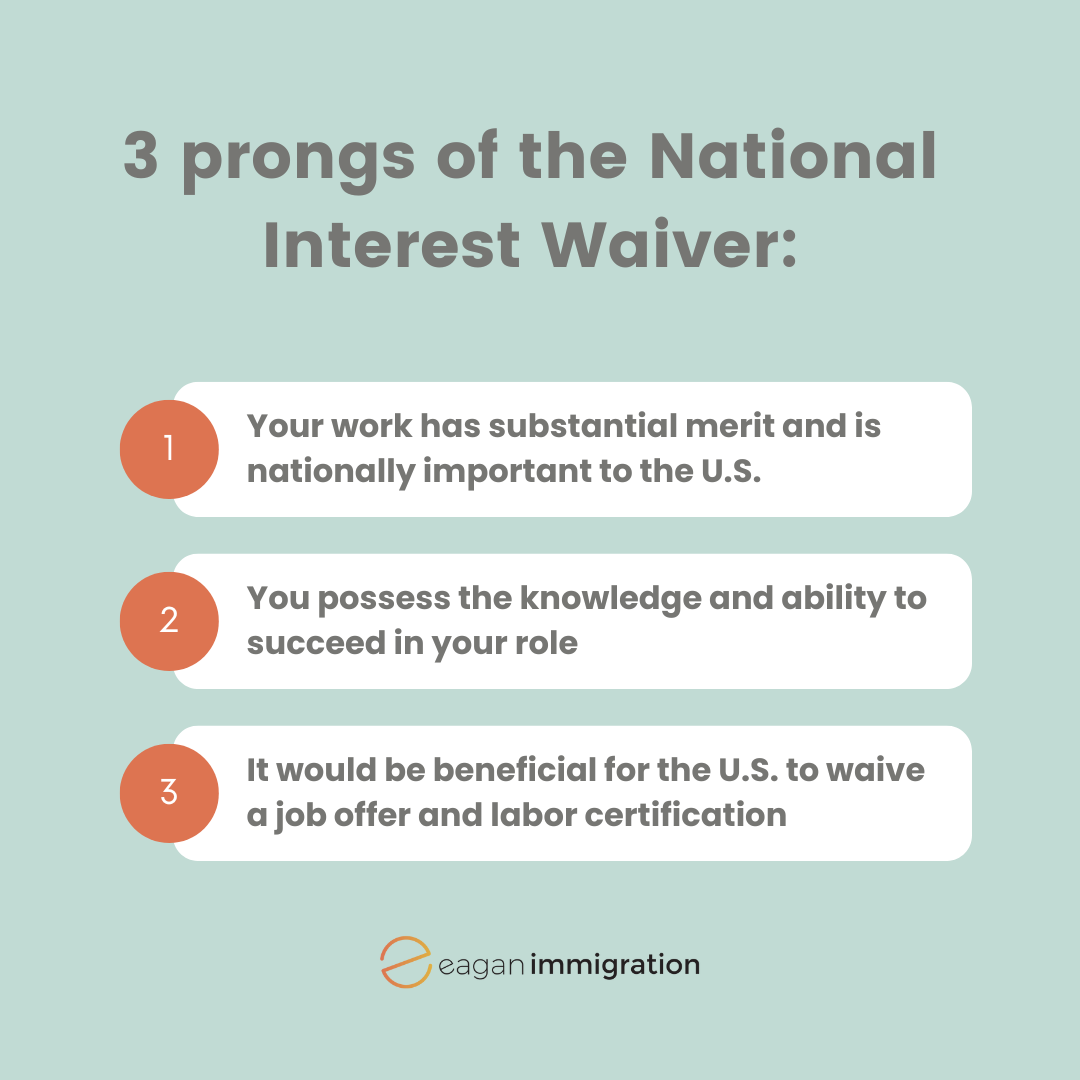
The EB-2 National Interest Waiver (NIW) is very similar to the EB-2 green card in that it is available to those with an advanced degree, a bachelor’s degree plus five years of experience, or exceptional ability. However, the main differences are that the EB-2 NIW is a self-petition pathway, and you must also apply for the National Interest Waiver. Esto requiere que proporciones pruebas of how your profession and/or exceptional ability is important and beneficial to the United States. The National Interest Waiver essentially “waives” any need for a permanent labor certification or a job offer – both of which are required for the general EB-2 green card. We highlight in our blog post on the EB-2 NIW that creating a strong argument is at the core of applying for this green card. That is primarily because the NIW requires you to submit evidence to fulfill three prongs:- Your work has substantial merit and is nationally important to the U.S.
- You have the knowledge and ability to work in your role in the U.S.
- It would be beneficial for the U.S. to waive a job offer and labor certification because it is evident your work will benefit the country
 Because the EB-2 NIW does not require an employer to petition you, you get to skip the process of obtaining a labor certification, which can save you time. As of June 2024, the Nebraska and Texas Service Centers are processing the Form I-140 for EB-2 NIW in 9.5 months.
The EB-3 Green Card
The last employment-based green card we’re covering in today’s post is the employment-based, third preference (EB-3) green card. While the other employment-based green cards we’ve highlighted in this post require advanced degrees or outstanding ability, this green card options is designed for skilled workers, professionals, and other workers.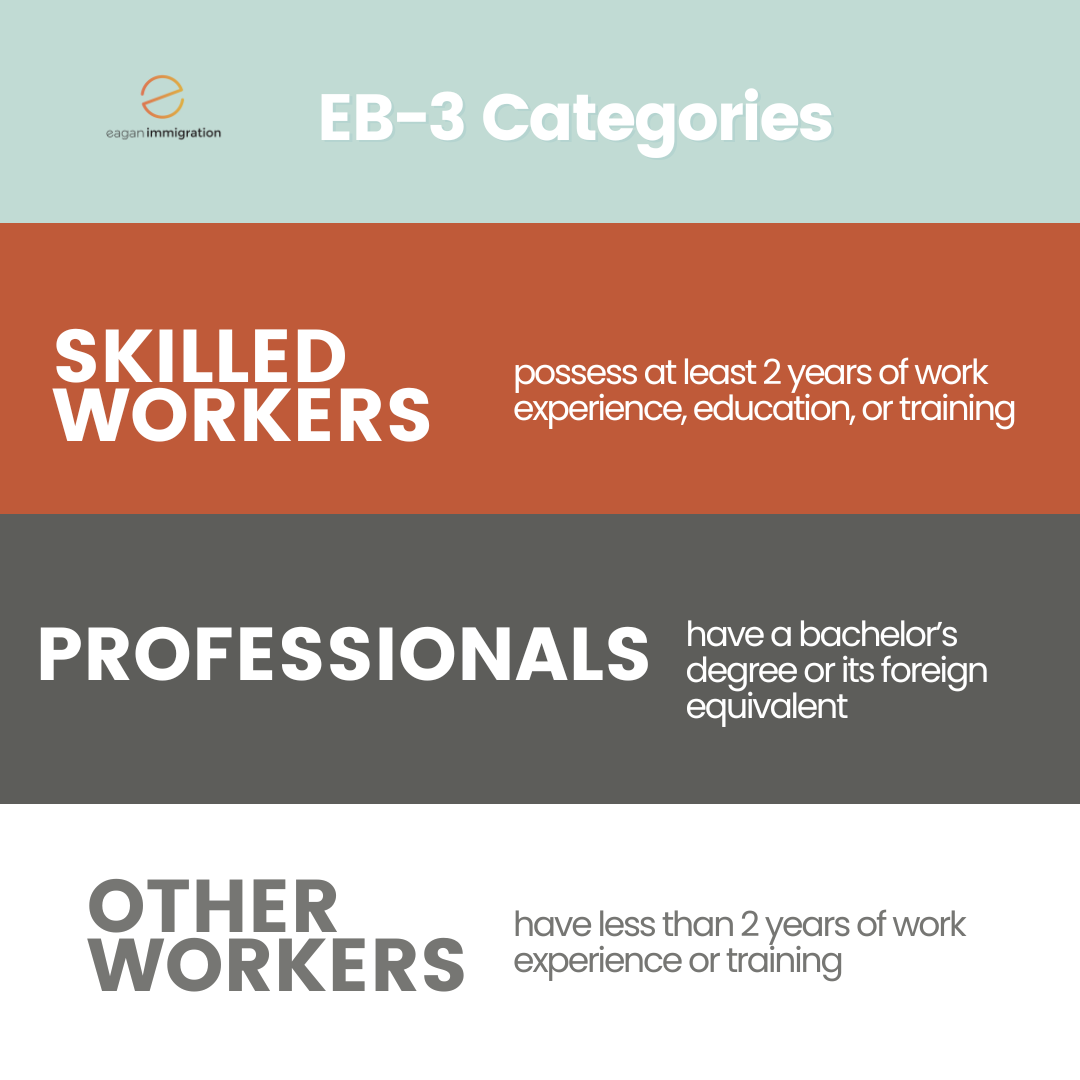 Like we mentioned earlier with the EB-2 green card, the EB-3 green card requires an employer to petition you, meaning this green card also requires you to receive a full-time job offer and your employer to obtain a labor certification.
According to USCIS, skilled workers must be able to provide evidence that they possess at least two years of job experience, education, or training that meets the job requirements specified on the labor certification.
The next EB-3 category is professionals. To be eligible for this category, you must have a Bachelor’s degree or its foreign equivalent and meet other requirements specified on your employer’s labor certification.
Finally, the EB-3 extends to other workers, also known as “unskilled” workers. If you have less than two years of training or experience but can prove that you can perform unskilled labor, You can fit into this category.
As we mentioned with the EB-2 green card category, the EB-3 requires your employer to obtain a labor certification prior to hiring you and petitioning you. After this is completed, your employer can file the Form I-140. As of June 2024, the Nebraska Service Center is processing the Form I-140 for EB-3 skilled workers and professionals in 7.5 months, while the Texas Service Center is processing them in 8 months. Meanwhile, the Form I-140 for EB-3 other workers is being processed between 8 and 8.5 months at the Nebraska and Texas Service Centers.
Like we mentioned earlier with the EB-2 green card, the EB-3 green card requires an employer to petition you, meaning this green card also requires you to receive a full-time job offer and your employer to obtain a labor certification.
According to USCIS, skilled workers must be able to provide evidence that they possess at least two years of job experience, education, or training that meets the job requirements specified on the labor certification.
The next EB-3 category is professionals. To be eligible for this category, you must have a Bachelor’s degree or its foreign equivalent and meet other requirements specified on your employer’s labor certification.
Finally, the EB-3 extends to other workers, also known as “unskilled” workers. If you have less than two years of training or experience but can prove that you can perform unskilled labor, You can fit into this category.
As we mentioned with the EB-2 green card category, the EB-3 requires your employer to obtain a labor certification prior to hiring you and petitioning you. After this is completed, your employer can file the Form I-140. As of June 2024, the Nebraska Service Center is processing the Form I-140 for EB-3 skilled workers and professionals in 7.5 months, while the Texas Service Center is processing them in 8 months. Meanwhile, the Form I-140 for EB-3 other workers is being processed between 8 and 8.5 months at the Nebraska and Texas Service Centers.