


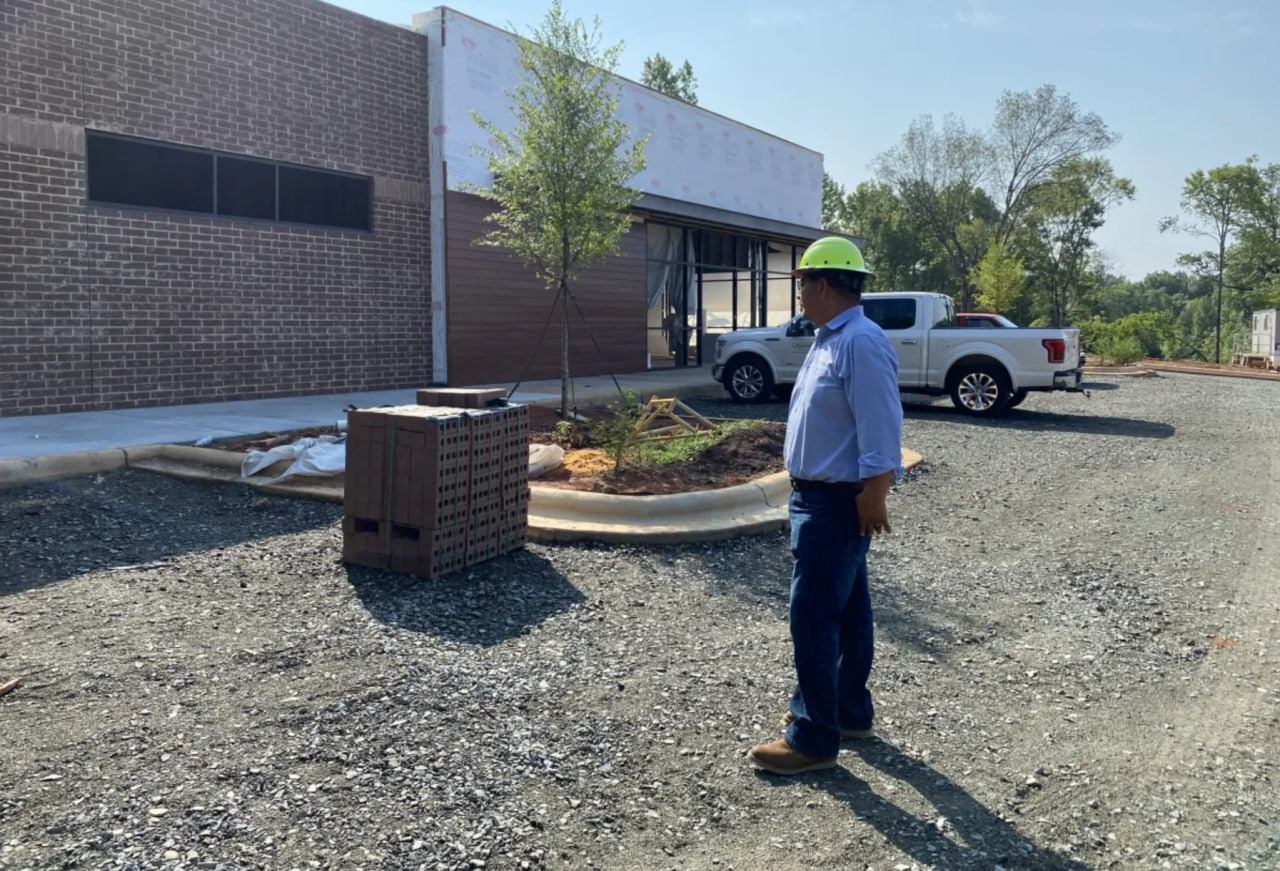
Rafael Casanova looks towards the new building of his company and says it feels good to have fulfilled a dream that he did not imagine possible 20 years ago
Rafael Casanova recalls that when he came to the United States from Mexico for the first time, at age 18, he would never have imagined that one day he would own his own company.
“My dream was to come here for a while to earn some money, build my house, and come back,” Casanova explained. ”I think that’s the dream of most immigrants, but then the months go by, the years go by, and you get used to it.”
Nearly 30 years later, Casanova, who is married and the father of three, walks through what will soon be the new headquarters of his construction company across from a shopping mall in Mint Hill, North Carolina.
He points to the front of the space and walks through what will be the main entrance to his 14,000-square-foot office. Approximately 60% of the space will be used by your company, and the rest will be leased.
He founded Casanova Siding 20 years ago, after living between Mexico and the United States for a few years. He had worked as a mechanic and at a roofing construction company.
Now Casanova is one of nearly 25,000 undocumented entrepreneurs in North Carolina, according to the research group New American Economy.
He says that because of his immigration status and not speaking English, it became more difficult for him to start his company. But after getting advice from a friend, he submitted an application for his Individual Taxpayer Identification Number (ITIN) which allowed him to start a corporation and pay taxes.
“There wasn’t a lot of information. They didn’t really tell you how you could do it,” Casanova adds. “I did it, but it wasn’t easy.”

Although he had an ITIN, he says his immigration status made it difficult for him to receive loans from banks. Things changed when his partner, who has the documents, started working with him.
“That part is a bit complicated for someone who sometimes doesn’t have much education or doesn’t really know how to do it,” Casanova explained.
Just as it was moving forward, the the economic recession of 2008 began. Casanova recalls having to give up his roofing work and was even forced to sell vegetables at a market to make ends meet.
Eventually business picked up again. He now has two partners and about 80 employees, including two of his sons.
“It feels pretty good to be able to contribute a little bit to the community and give back some of what you’ve received,” explained Casanova, who describes himself as a strong-willed person who never forgets his roots and is always willing to support others.
Approximately 80% of its employees are Latino. He says that if they ask him for advice, he sits down with them and shares his experience. He mentions that it is their decision whether they want to implement his recommendations. Some do it and start their own companies, others stay working with him.
“There is a world of opportunities. But it’s up to them to want to do it and achieve it,” Casanova said. “This country gives you a lot of opportunities, whether you have papers or no papers. If you want to do it, you can do it.”
Back in his new office, Casanova walks down a corridor and points out where the new conference room will be.
Looking towards his new company building, he says it feels great to have fulfilled a dream he didn’t imagine possible 20 years ago. Another goal he still has to accomplish is to become a permanent resident of the country. For now, he says, he’s going to keep focusing on growing his business.
Source: Ramírez, M. (2021, August 13). Latino entrepreneur inspires other immigrants with his experience. The News. https://lanoticia.com/hay-un-mundo-de-oportunidades-emprendedor-latino-inspira-a-otros-inmigrantes/