



By Natalie McQuilkin
With the B-1 visa, you can open the door to global business opportunities. Whether you are attending conferences, negotiating contracts, or exploring new markets, this business-related nonimmigrant visa is your ticket to international business and travel success. In this blog post, we will cover the basics of the B-1 visa, explain how to apply for the visa, and highlight its benefits and limitations.
What is the B-1 visa?
This visa allows foreign citizens to travel and remain in the United States for up to six months for business purposes.
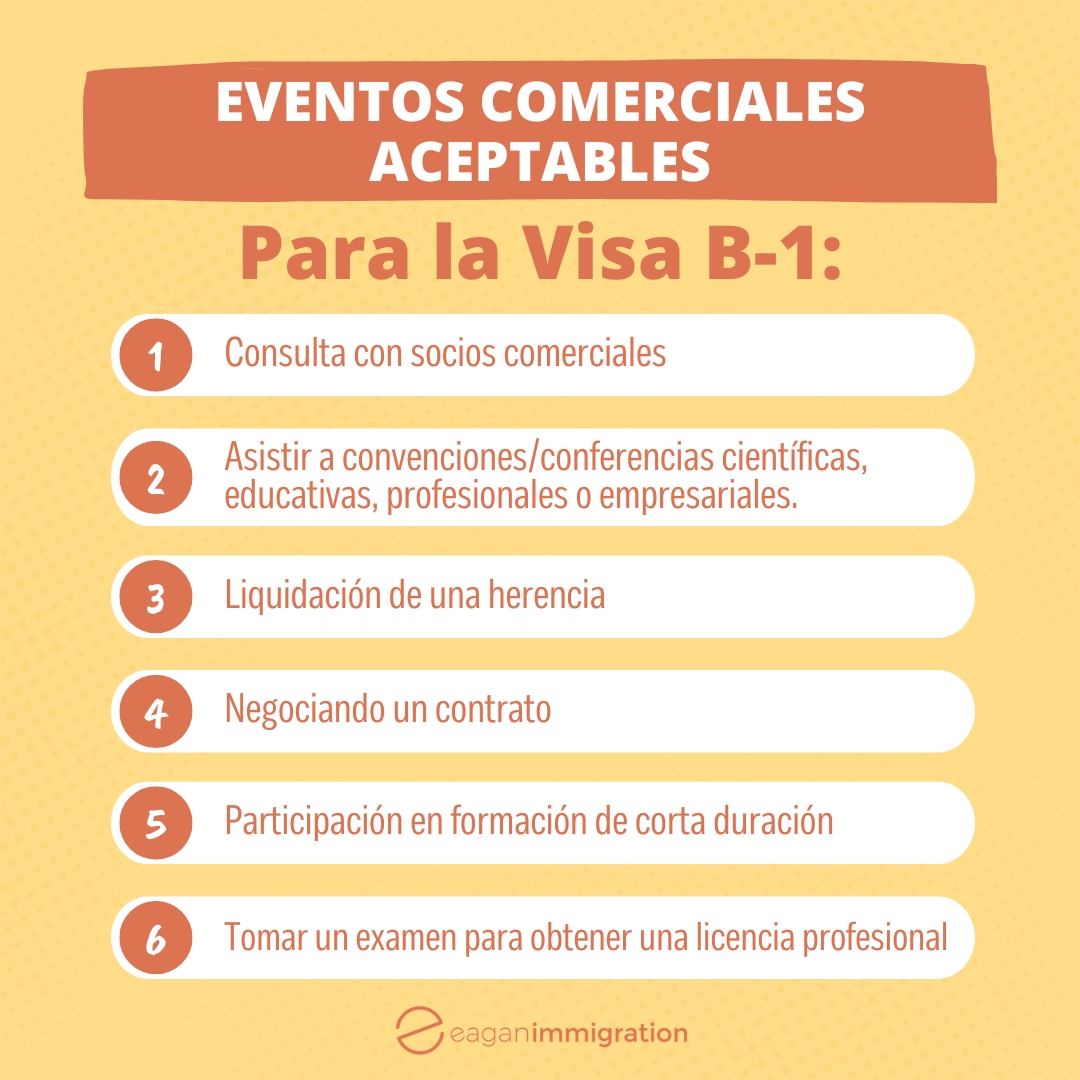
These are some common business-related reasons found within the B-1 visa guidelines:
- Consult with business partners : this could include attending a meeting to discuss current or future business plans.
- Traveling to a convention or conference the conference or lecture can be scientific, educational, professional, or business-related.
- Liquidation of an estate You can come to the United States to resolve a loved one's financial affairs after they pass away.
- Contract negotiation : The B-1 visa allows you to come to the U.S. to negotiate a contract.
- Participate in short-term training : If the company you work for is offering essential training in the U.S., you can attend on a B-1 visa.
- Professional Exams and Licenses : If your home country does not offer certain professional exams or licenses, you can come to the United States to take them on a B-1 visa.
The following lesser-known business activities The following are also acceptable for a B-1 visa:
- Missionaries and religious leaders can attend meetings, preach temporarily, and perform missionary work, provided they are not paid by a source based in the United States.
- Foreigners can participate in volunteer programs.
- Professional athletes They can compete for cash prizes or as part of their foreign team.
- International medical students They can participate in elective internships or rotations under the supervision of medical staff in the U.S.
- Foreigners can plan, set up, and maintain exhibits at international trade shows or exhibitions.
- Personal employees/domestic workers can temporarily assist their employers in the U.S.
- Commercial/Industrial Workers They can install or repair equipment purchased abroad.
The B-1 visa is suitable for many types of business activities, and you can read about even more options here. However, it is important to note that, although this visa allows you to come to the U.S. on business, He is not allowed to work in the usual sense or be compensated by a U.S. source while in the United States. This is because you are not authorized to work in the US with the B-1 visa. However, there are an exception for visiting professors who are giving lectures, teaching as guest instructors, or participating in an academic festival. You may receive honoraria provided that your activities at any one institution do not exceed nine days and you have not accepted similar payments from more than five institutions in the past six months.
Am I eligible for a B-1 visa?
The U.S. Citizenship and Immigration Services (USCIS) has eligibility requirements that you must meet in order to be granted this visa. USCIS wants to ensure that you are actually coming to the United States to conduct business and that you plan to return to your home country within six months.
To be eligible for a B-1 visa, you must be able to demonstrate the following:
- You wish to enter the U.S. for legitimate business purposes
- He plans to stay in the U.S. for a temporary and specific period of time.
- He has enough funds to pay for his trip and stay
- He has a permanent residence outside the U.S. and plans to return there after leaving the United States.
- Otherwise, it is inadmissible in the United States
To demonstrate these requirements, you will have to submit supporting documents, a crucial part of the application process, which we discuss below.
How do I apply for the B-1 visa?
The B-1 visa application consists of several steps, and the order of the steps and how to complete them may vary depending on your country. Therefore, you must first review the instructions for a specific U.S. Embassy or Consulate. here.
Once you are familiar with the process, you can complete the online Nonimmigrant Visa Application (Form DS-160), which you can find here. The DS-160 form costs $185 and requires you to upload a photo that meets USCIS photo requirements.
After completing Form DS-160, you must schedule a visa interview at the U.S. Embassy or Consulate in your home country. You can check the wait times for interviews at specific embassies or consulates by clicking this link.
You will need to bring several documents to your visa interview, such as your passport, the DS-160 form, the payment receipt, and a photo. The B-1 visa also requires you to provide supporting evidence showing that you are eligible for the visa, which includes:
- A letter describing the purpose of your trip to the US and how long you plan to stay
- A letter from your company explaining the purpose of your trip to the US and your job position
- A letter from your employer, including the pay stubs for the last three months
- Financial/bank account statements to prove that you can support your trip to the US, as well as your stay there.
- Proof of ties to your country of origin, which may include an employment contract, a lease agreement, or a property deed
- Criminal record
- Documentation of previous visits to the United States
Providing these documents shows the interviewing officer your exact plans for coming to the United States and that you have the support of your employer to do so. These documents also check the eligibility boxes to show that you plan to return to your home country, that you can support yourself financially while you are in the U.S., and that you are admissible to the United States.
Benefits and disadvantages of the B-1 visa
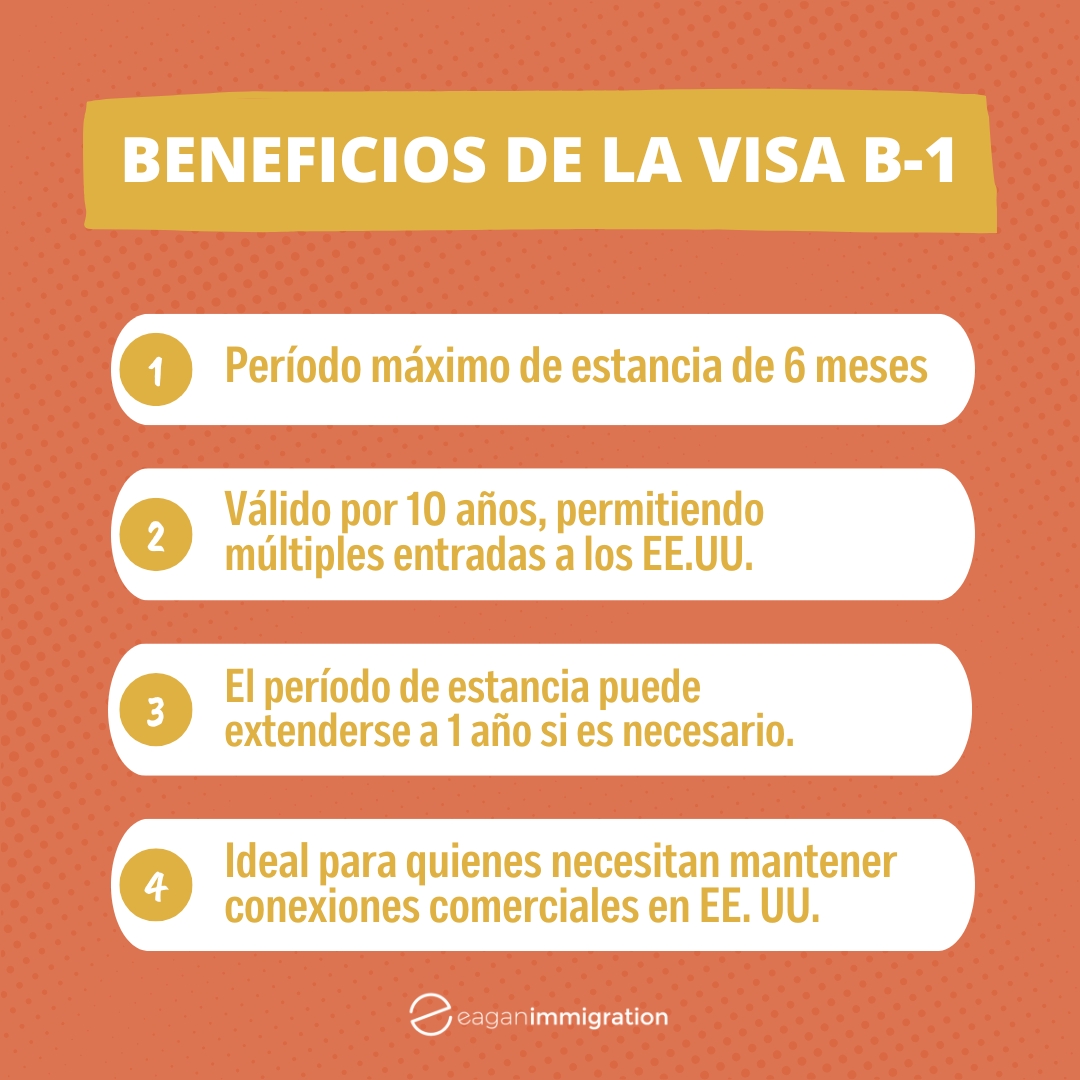
There are many benefits to the B-1 visa. If you can demonstrate that you need to remain in the United States for business for more than six months, . This extension ensures that you can complete all the tasks you need in one trip without having to return to the United States at another time.
Another advantage of the B-1 visa is that it is valid for up to 10 years from when it was originally issued, which means that after staying in the United States for the six-month period with the visa, you can return to the United States for business with the B-1 visa again within 10 years from the date you first obtained the visa. This is very useful if you need to come to the United States on multiple occasions for business reasons.
Because the B-1 visa allows you to stay in the U.S. for up to six months and return to the U.S. multiple times over a 10-year span, you can develop and maintain strong business ties in the United States, which is crucial for certain positions.
That being said, there are some drawbacks to the B-1 visa.
First of all, your spouse and children are not eligible for a dependent visa. Instead, they have to obtain their own B-1 or B-2 (Tourist) separately.
Secondly, as a nonimmigrant visa, the B-1 visa does not provide a path to obtain a green card on its own. However, you can apply for other visas that have green card paths while on the B-1 visa, such as the EB-1A visa, the EB-2 National Interest Waiver, the O-1 visa Hello H-1B visa, but applying for these visas is a long, multi-step process.
Should I hire a business immigration lawyer to help me apply for the B-1 visa?
Because applying for the B-1 visa requires many steps and documents, it is a good idea to have a business immigration attorney on your side if you want to apply for the B-1 visa. Eagan Immigration's lead business attorney, Hannah Whaley, can help you determine if you meet the eligibility requirements for the B-1 visa. Attorney Whaley is also here to help you draft your letter of intent to travel to the United States, as well as to complete the necessary forms, compile the required documentation, and prepare you for your visa interview.
References
B-1 Temporary Visitor for Business, U.S. Citizenship and Immigration Services, (last updated: July 27, 2021), B-1 Temporary Business Visitor | USCIS, (last visited October 31, 2024).
Richard T. Herman, Esq., Explanation of the B1/B2 Visitor Visa: A Complete Guide to US Business and Tourism Visas, Herman Legal Group, Explanation of the B1/B2 Visitor Visa: A Complete Guide to US Business and Tourist Visas – Herman Legal Group, (last accessed October 31, 2024).
B-1/B-2 Visitor Visa, Explained, Boundless, B-1 and B-2 Tourist Visas Explained – Boundless Immigration, (last accessed October 31, 2024).
US B-1 Visa – Explanation of the US Business Visa, Global Citizen Solutions, (last updated: April 30, 2024), US B-1 Visa – US Business Visa Explained | A Guide by GCS, (last accessed October 31, 2024).
Visa Service Fees, U.S. Department of State – Bureau of Consular Affairs, Visa Service Fees, (last accessed October 31, 2024).