



 Aside from backlogs, the process of finding an employer who will sponsor you for an employment-based immigrant visa and your adjustment of status petition can take years.
So, what can you do if you're nearing your six-year limit and are still waiting for your green card to be approved?
In this blog post, we’re going to discuss the American Competitiveness in the 21st Centuryst Century Act of 2000, more commonly known as AC21, which allows H-1B visa holders to work beyond the six-year limit and change jobs while waiting to receive permanent residency.
What is AC21?
AC21 was created in October 2000 with the aim of encouraging more H-1B workers to come to the U.S., as there was a shortage of skilled workers in the country at the time. Essentially, AC21 allows you, as an H-1B worker, to obtain an extension on your visa so you can continue working while you wait to receive your green card. This promotes job stability and minimizes gaps in your employment, while also ensuring that you maintain legal status while you’re in the United States.
Preliminary Requirements for AC21
Before you can consider AC21, you must be awaiting approval of your green card. This means you need a pending application to adjust your status with an employer who has agreed to sponsor you for one.
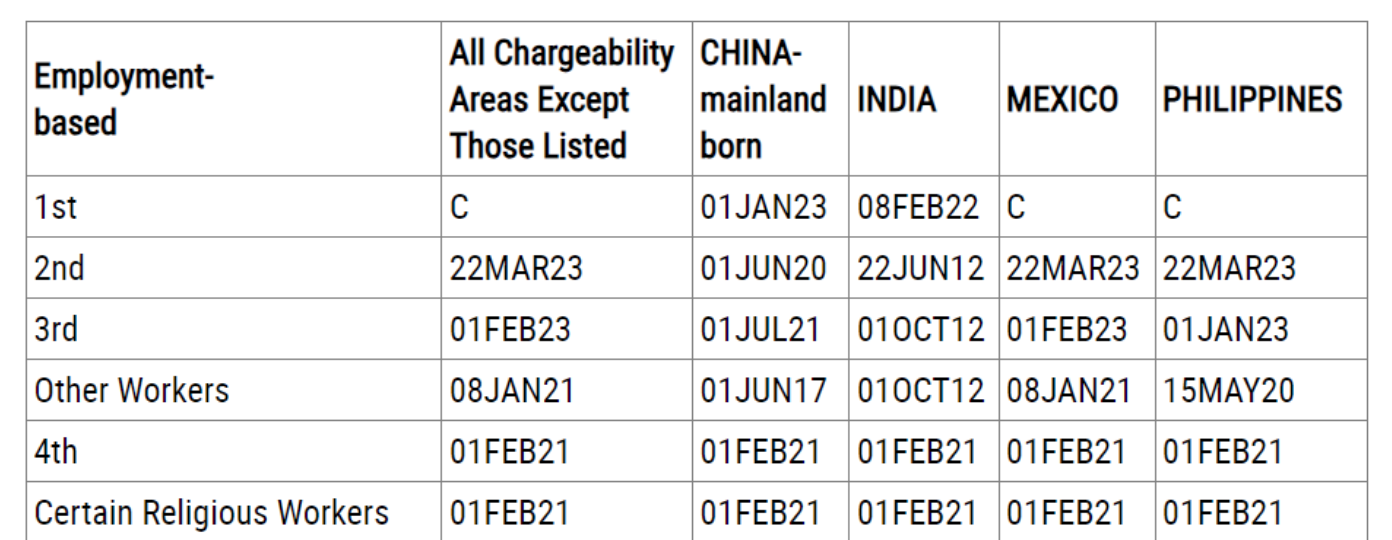
The first step in this process is to become the beneficiary of an immigrant work visa. The H-1B visa is a nonimmigrant visa, so it does not provide a pathway to permanent residency on its own. Instead, you’ll need to find an employer to sponsor you for a first-, second-, or third-preference employment-based immigrant visa.
The first-preference employment-based visa, or EB-1, is for outstanding professors and researchers or certain multinational managers or executives. In addition to those positions, it accommodates those with extraordinary ability, such as those who have won a Pulitzer Prize or an Oscar, as we explain in this post. The EB-2, the second-preference employment-based visa, is intended for those with an advanced degree or exceptional ability. This can include engineers, medical professionals, business executives, artists, professors, scientists, and others. Finally, EB-3, The third-preference employment-based visa is for professionals, skilled workers, and other workers—or those who lack work experience. Common jobs for professionals and skilled workers include healthcare professionals, engineers, teachers, and information technology specialists. “Other worker” jobs include housekeepers, janitors, factory workers, construction workers, and more.
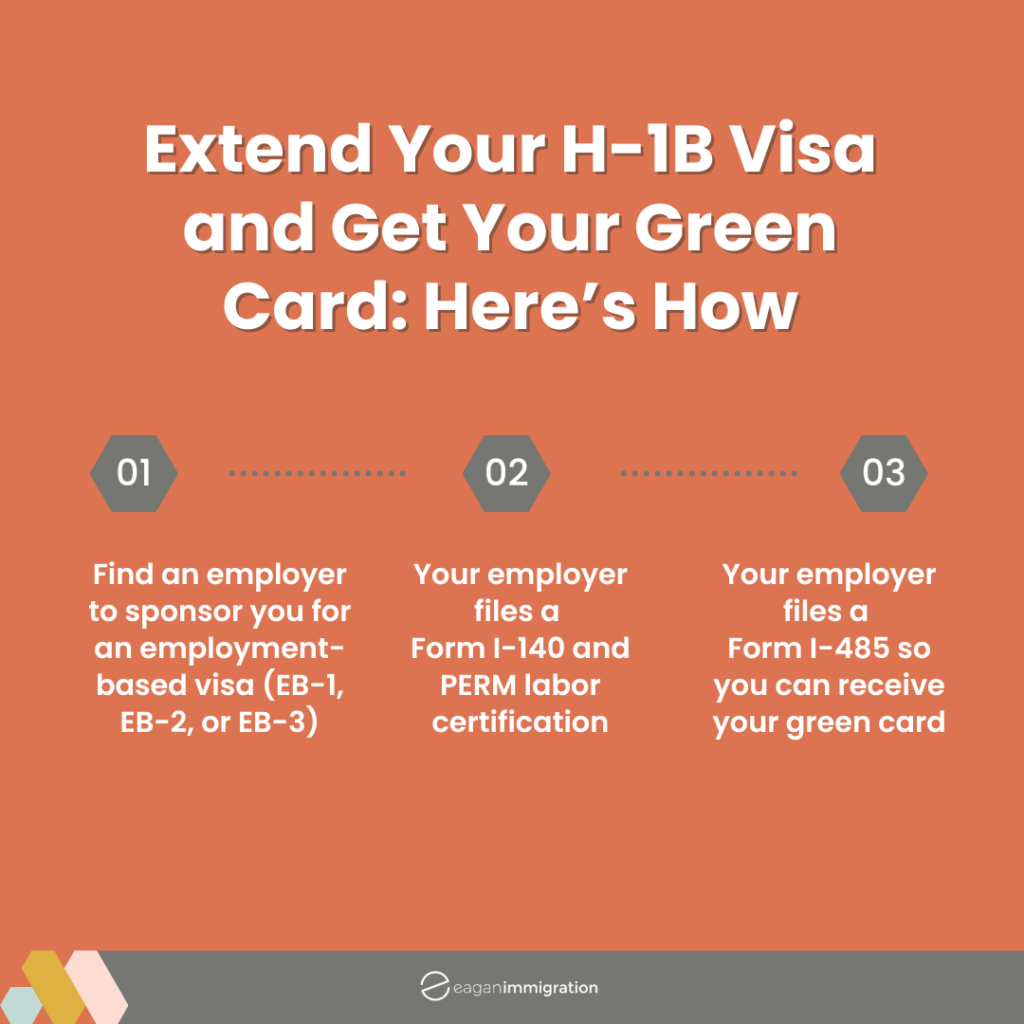
petition Form I-140, or the Immigrant Petition for Alien Workers. Your employer will also file a Department of Labor-approved PERM labor certification, which we discuss in this blog post, along with the Form I-485, Application to Register as a Permanent Resident Residency or Adjustment of Status. Once these steps are complete, you’ve already crossed off USCIS's first two requirements For AC21 eligibility:
Aside from backlogs, the process of finding an employer who will sponsor you for an employment-based immigrant visa and your adjustment of status petition can take years.
So, what can you do if you're nearing your six-year limit and are still waiting for your green card to be approved?
In this blog post, we’re going to discuss the American Competitiveness in the 21st Centuryst Century Act of 2000, more commonly known as AC21, which allows H-1B visa holders to work beyond the six-year limit and change jobs while waiting to receive permanent residency.
What is AC21?
AC21 was created in October 2000 with the aim of encouraging more H-1B workers to come to the U.S., as there was a shortage of skilled workers in the country at the time. Essentially, AC21 allows you, as an H-1B worker, to obtain an extension on your visa so you can continue working while you wait to receive your green card. This promotes job stability and minimizes gaps in your employment, while also ensuring that you maintain legal status while you’re in the United States.
Preliminary Requirements for AC21
Before you can consider AC21, you must be awaiting approval of your green card. This means you need a pending application to adjust your status with an employer who has agreed to sponsor you for one.
The first step in this process is to become the beneficiary of an immigrant work visa. The H-1B visa is a nonimmigrant visa, so it does not provide a pathway to permanent residency on its own. Instead, you’ll need to find an employer to sponsor you for a first-, second-, or third-preference employment-based immigrant visa.
The first-preference employment-based visa, or EB-1, is for outstanding professors and researchers or certain multinational managers or executives. In addition to those positions, it accommodates those with extraordinary ability, such as those who have won a Pulitzer Prize or an Oscar, as we explain in this post. The EB-2, the second-preference employment-based visa, is intended for those with an advanced degree or exceptional ability. This can include engineers, medical professionals, business executives, artists, professors, scientists, and others. Finally, EB-3, The third-preference employment-based visa is for professionals, skilled workers, and other workers—or those who lack work experience. Common jobs for professionals and skilled workers include healthcare professionals, engineers, teachers, and information technology specialists. “Other worker” jobs include housekeepers, janitors, factory workers, construction workers, and more.
petition Form I-140, or the Immigrant Petition for Alien Workers. Your employer will also file a Department of Labor-approved PERM labor certification, which we discuss in this blog post, along with the Form I-485, Application to Register as a Permanent Resident Residency or Adjustment of Status. Once these steps are complete, you’ve already crossed off USCIS's first two requirements For AC21 eligibility:
- You are a beneficiary of an approved Form I-140 (Immigrant Petition for Alien Worker), or your Form I-140 petition is pending and awaiting approval
- The Form I-140 petition is filed for EB-1, EB-2, or EB-3 employment-based visas
 AC21 Eligibility Requirements for Extension
According to Temple University, you can be eligible to maintain your H-1B status beyond the six-year H-1B visa maximum if you fall under one of the three following categories:
AC21 Eligibility Requirements for Extension
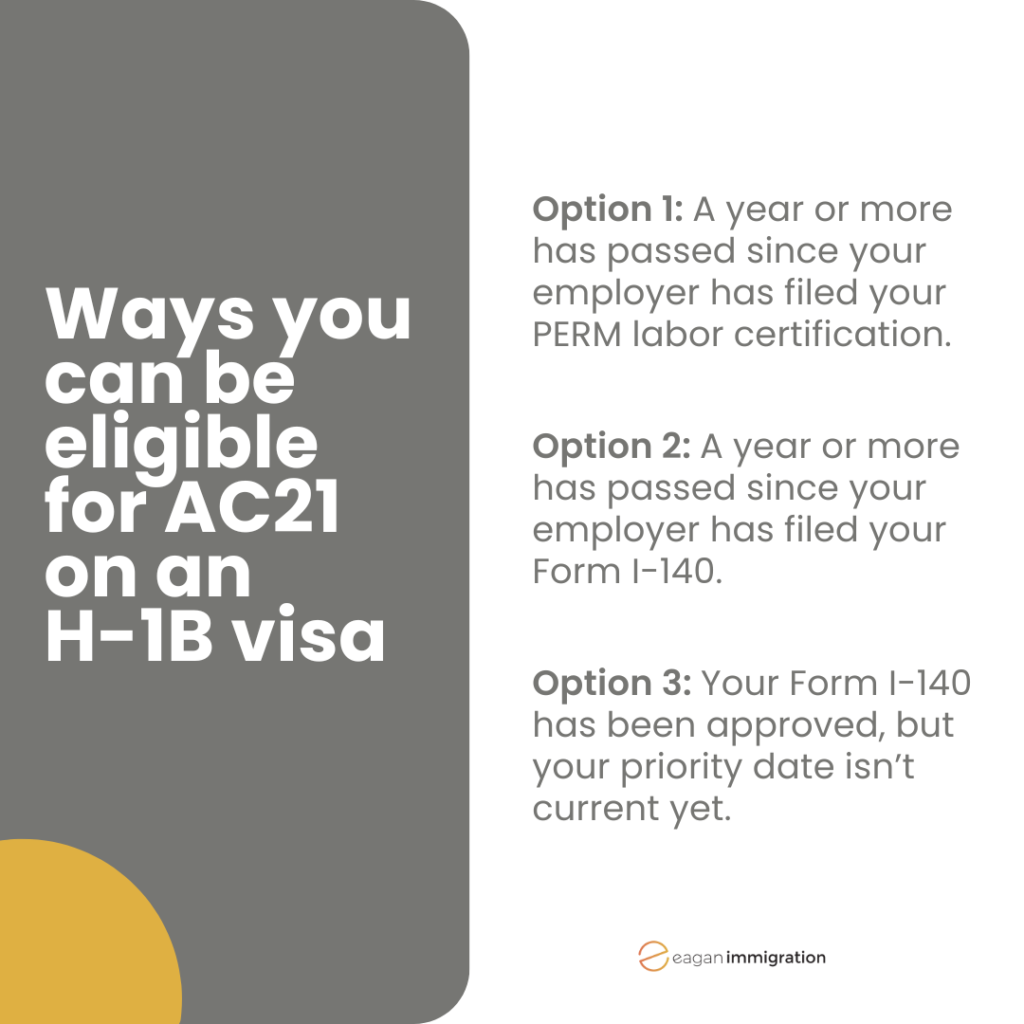
According to Temple University, you can be eligible to maintain your H-1B status beyond the six-year H-1B visa maximum if you fall under one of the three following categories:
- A year or more has passed since your employer has filed an application for a labor certification so you can obtain status as an employment-based immigrant
- A year or more has passed since your employer has filed Form I-140 for you as an employment-based immigrant
- Your Form I-140 has been approved, but your priority date to adjust your status isn’t current yet
 AC21 permits a one- or three-year extension for your H-1B visa. To be eligible for a one-year extension, your PERM labor certification or Form I-140 must be Submitted aat least a the year before your H-1B visa expires. If your Form I-140 has been approved, but your priority date isn't If you are behind on payments due to backlogs, you may be eligible for a three-year extension. If neither of these extensions providis enough time for you to remain in the United States while you wait to receive your green card, you can apply for another one-year extension so long as youWhether labor certification or Form I-140 has been.
Interested in Extending Your H-1B Visa?
If you have an H-1B visa and are hoping to one day obtain permanent status in the United States, it’s best to be proactive about your future now. This is especially true if you’re nearing the end of your H-1B visa, or if you’re from countries like China or India, which have hefty backlogs to get through before 2024 priority dates become current. Missing the deadline can have a huge impact on your life. You might have to pursue a different visa to remain in the United States, or you might have to return to your home country for a year before applying for the H-1B visa again.
Using AC21 for the H-1B visa requires a lot of planning. Not only will you have to find an employer willing to sponsor you and file an adjustment of status petition on your behalf, but you’ll have to time everything right so you will be eligible for an extension.
Here at Eagan Immigration, we are here to guide you through each step of the process and answer all of your questions. If you’re interested in extending your H-1B visa so you can continue working and living in the U.S. while your green card is processed, contact us today by by calling our office at (202) 709-6439 or by visiting this link.
References
Visa Bulletin for July 2024, U.S. Department of State – Bureau of Consular Affairs, (Jun. 5, 2024), Visa Bulletin for July 2024 (state.gov), (last visited: July 5, 2024).
Frank Gogol, Guide to AC21 and Green Cards in the U.S., Stilt, (Apr. 2024), COMPLETE Guide to AC21 and Green Cards in the U.S. [2024] (stilt.com).
Frank Gogol, The Process of Converting an H-1B Visa to a Green Card Explained, Stilt, (Apr. 12, 2024), The H-1B Visa to Green Card Process Explained [2024] (stilt.com)
Policy Manual: Chapter 5 – Job Portability after Adjustment Filing and Other AC21 Provisions, USCIS, Chapter 5 – Job Portability After Filing an Adjustment of Status and Other AC21 Provisions | USCIS, (last visited: July 8, 2024).
Employment-Based Immigration: First Preference EB-1, USCIS, Employment-Based Immigration: First Preference EB-1 | USCIS, (last visited: July 5, 2024).
Special H-1B Status Beyond Six Years, Temple University: International Student and Scholar Services, Special H-1B Status Beyond Six Years | Temple University International Student and Scholar Services, (last visited: July 5, 2024).
James Pittman, Extending H-1B Visa Status Beyond Six Years Under AC21, Docketwise Immigration Software, (June 24, 2024), Extending H-1B Visa Status Beyond Six Years With AC21 – Docketwise Immigration Software.
AC21 permits a one- or three-year extension for your H-1B visa. To be eligible for a one-year extension, your PERM labor certification or Form I-140 must be Submitted aat least a the year before your H-1B visa expires. If your Form I-140 has been approved, but your priority date isn't If you are behind on payments due to backlogs, you may be eligible for a three-year extension. If neither of these extensions providis enough time for you to remain in the United States while you wait to receive your green card, you can apply for another one-year extension so long as youWhether labor certification or Form I-140 has been.
Interested in Extending Your H-1B Visa?
If you have an H-1B visa and are hoping to one day obtain permanent status in the United States, it’s best to be proactive about your future now. This is especially true if you’re nearing the end of your H-1B visa, or if you’re from countries like China or India, which have hefty backlogs to get through before 2024 priority dates become current. Missing the deadline can have a huge impact on your life. You might have to pursue a different visa to remain in the United States, or you might have to return to your home country for a year before applying for the H-1B visa again.
Using AC21 for the H-1B visa requires a lot of planning. Not only will you have to find an employer willing to sponsor you and file an adjustment of status petition on your behalf, but you’ll have to time everything right so you will be eligible for an extension.
Here at Eagan Immigration, we are here to guide you through each step of the process and answer all of your questions. If you’re interested in extending your H-1B visa so you can continue working and living in the U.S. while your green card is processed, contact us today by by calling our office at (202) 709-6439 or by visiting this link.
References
Visa Bulletin for July 2024, U.S. Department of State – Bureau of Consular Affairs, (Jun. 5, 2024), Visa Bulletin for July 2024 (state.gov), (last visited: July 5, 2024).
Frank Gogol, Guide to AC21 and Green Cards in the U.S., Stilt, (Apr. 2024), COMPLETE Guide to AC21 and Green Cards in the U.S. [2024] (stilt.com).
Frank Gogol, The Process of Converting an H-1B Visa to a Green Card Explained, Stilt, (Apr. 12, 2024), The H-1B Visa to Green Card Process Explained [2024] (stilt.com)
Policy Manual: Chapter 5 – Job Portability after Adjustment Filing and Other AC21 Provisions, USCIS, Chapter 5 – Job Portability After Filing an Adjustment of Status and Other AC21 Provisions | USCIS, (last visited: July 8, 2024).
Employment-Based Immigration: First Preference EB-1, USCIS, Employment-Based Immigration: First Preference EB-1 | USCIS, (last visited: July 5, 2024).
Special H-1B Status Beyond Six Years, Temple University: International Student and Scholar Services, Special H-1B Status Beyond Six Years | Temple University International Student and Scholar Services, (last visited: July 5, 2024).
James Pittman, Extending H-1B Visa Status Beyond Six Years Under AC21, Docketwise Immigration Software, (June 24, 2024), Extending H-1B Visa Status Beyond Six Years With AC21 – Docketwise Immigration Software.