


 By Natalie McQuilkin
With the B-1 visa, you can unlock the door to global business opportunities. Whether you’re attending conferences, negotiating contracts, or exploring new markets, this business-related, nonimmigrant visa is your ticket to international business success and travel. In this blog post, we’ll cover the basics of the B-1 visa, explain how to apply for the visa, and highlight its benefits and limitations.
What is the B-1 visa?
This visa allows foreign nationals to travel to and stay in the United States for up to six months for business purposes.
Here are some common business-related reasons that fall within the B-1 visa guidelines:
By Natalie McQuilkin
With the B-1 visa, you can unlock the door to global business opportunities. Whether you’re attending conferences, negotiating contracts, or exploring new markets, this business-related, nonimmigrant visa is your ticket to international business success and travel. In this blog post, we’ll cover the basics of the B-1 visa, explain how to apply for the visa, and highlight its benefits and limitations.
What is the B-1 visa?
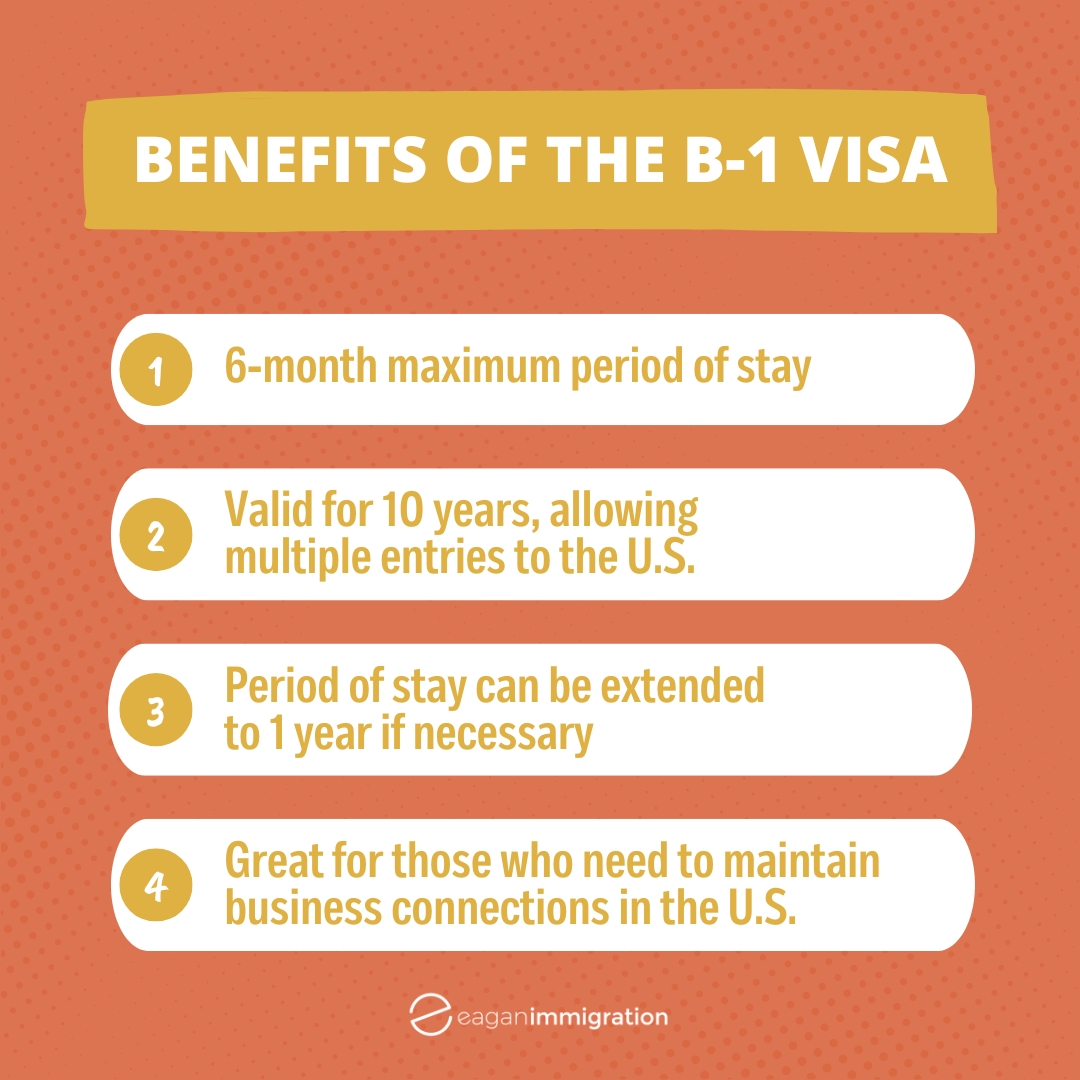
This visa allows foreign nationals to travel to and stay in the United States for up to six months for business purposes.
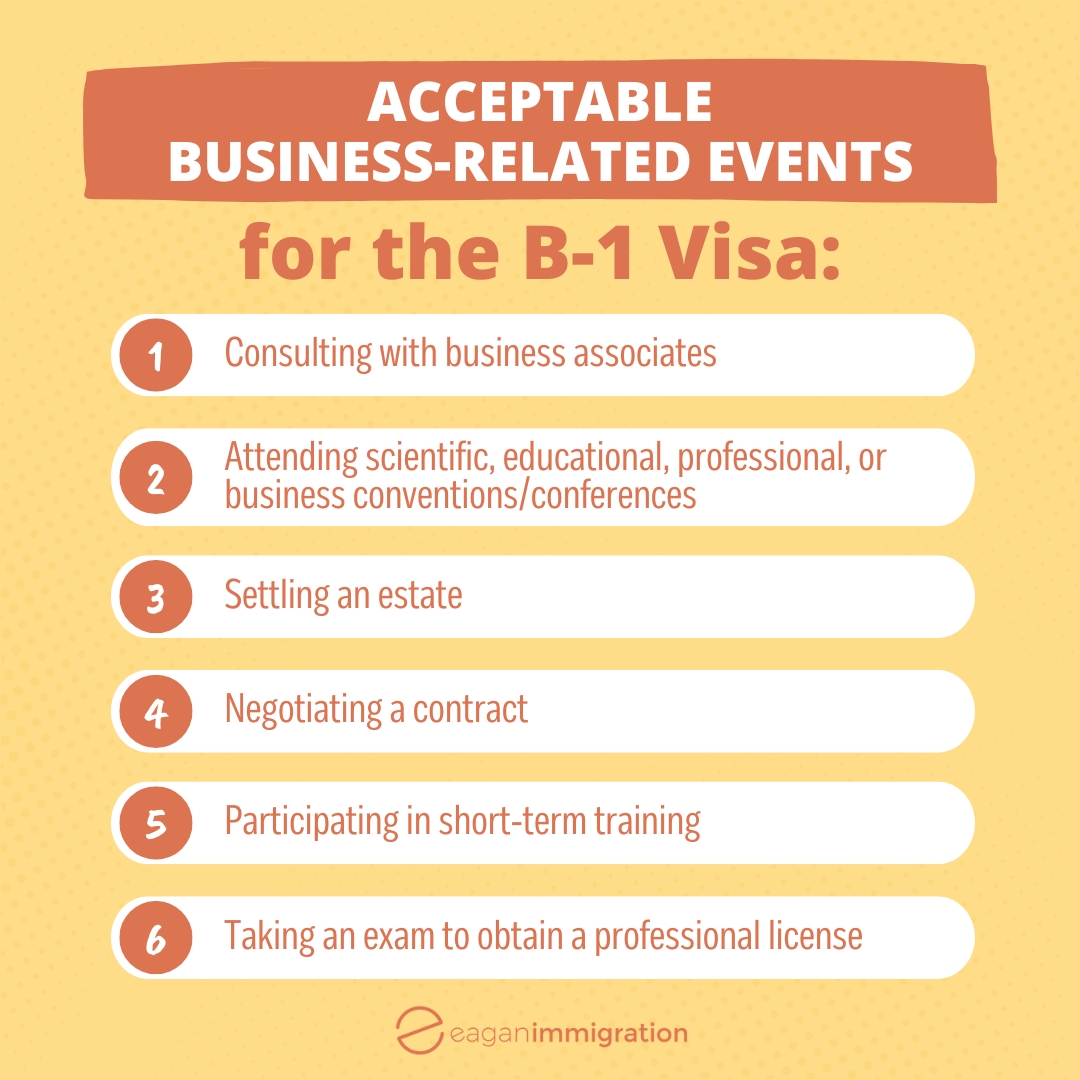
Here are some common business-related reasons that fall within the B-1 visa guidelines:
- Consulting with business associates – This could include attending a meeting to discuss current or upcoming business plans.
- Traveling for a convention or conference – The conference can be scientific, educational, professional, or business related.
- Settling an estate – You can come to the United States to settle a loved one’s financial affairs after they pass away.
- Negotiating a contract – The B-1 visa allows you to come to the U.S. in order to come to an agreement over a contract.
- Participating in short-term training – If the company you work for is holding a vital training in the U.S., you can attend with the B-1 visa.
- Professional examinations and licensing – If your home country does not offer certain professional exams or licensures, you can come to the United States to take them with the B-1 visa.
- Missionaries and religious leaders can attend meetings, temporarily preach, and perform missionary work, so long as they are not paid by a U.S.-based source.
- Foreign nationals can participate in volunteer programs.
- Professional athletes can compete for prize money or as part of their foreign team.
- Foreign medical students eligible to participate in elective clerkships or clinical rotations under the supervision of a medical staff in the U.S.
- Foreign nationals can plan, assemble, and maintain exhibits at international fairs or expositions.
- Personal employees/domestic workers can help their employers in the U.S. temporarily.
- Commercial/industrial workers can install or repair equipment purchased abroad.
 To meet these requirements, you’ll need to submit supporting evidence, a crucial part of the application process, which we discuss below.
How do I apply for a B-1 visa?
Applying for the B-1 visa consists of several steps, and the order of how the steps and how you go about completing them may vary depending on your country. So, you should first review instructions for a specific U.S. Embassy or Consulate here.
Once you’ve become familiar with the process, you can complete the Online Nonimmigrant Visa Application (Form DS-160), which you can find here. Form DS-160 costs $185 and requires you to upload a photo that meets USCIS’ photo requirements.
After filling out Form DS-160, you’ll need to schedule a visa interview at the U.S. Embassy or Consulate in your home country. You can check the wait times for interviews at specific embassies or consulates by clicking this link.
You’ll have to bring several documents with you to your visa interview, such as your passport, Form DS-160, payment receipt, and photo. The B-1 visa also requires you provide supporting evidence that shows you’re eligible for the visa, including:
To meet these requirements, you’ll need to submit supporting evidence, a crucial part of the application process, which we discuss below.
How do I apply for a B-1 visa?
Applying for the B-1 visa consists of several steps, and the order of how the steps and how you go about completing them may vary depending on your country. So, you should first review instructions for a specific U.S. Embassy or Consulate here.
Once you’ve become familiar with the process, you can complete the Online Nonimmigrant Visa Application (Form DS-160), which you can find here. Form DS-160 costs $185 and requires you to upload a photo that meets USCIS’ photo requirements.
After filling out Form DS-160, you’ll need to schedule a visa interview at the U.S. Embassy or Consulate in your home country. You can check the wait times for interviews at specific embassies or consulates by clicking this link.
You’ll have to bring several documents with you to your visa interview, such as your passport, Form DS-160, payment receipt, and photo. The B-1 visa also requires you provide supporting evidence that shows you’re eligible for the visa, including:
- A letter describing the purpose of your trip to the U.S. and how long you plan to stay
- A letter from your company explaining the purpose of your trip to the U.S. and your job position
- A letter from your employer, including your pay stubs for the past three months
- Financial/bank statements to prove that you can support your trip to the U.S. as well as your stay there
- Proof of ties to your home country, which can include a job contract, a lease, or a property deed
- Criminal records
- Documentation of previous visits to the United States
 Should I hire a business immigration attorney to help me apply for the B-1 visa?
Because applying for the B-1 visa requires many steps and documents, it’s a good idea to have a business immigration attorney on your side if you want to apply for the B-1 visa. Eagan Immigration’s senior business attorney, Hannah Whaley, can help you determine if you meet the eligibility requirements for the B-1 visa. Attorney Whaley is also here to help you draft your letter of intent for going to the United States, as well as filling out the necessary forms, compiling the required documentation, and preparing you for your visa interview.
If you’re interested in working with us to get your B-1 visa, call our office today at (202) 709-6439 orclick this link.
References
B-1 Temporary Business Visitor, U.S. Citizenship and Immigration Services, (last updated: Jul. 27, 2021), B-1 Temporary Business Visitor | USCIS, (last visited: Oct. 31, 2024).
Richard T. Herman, Esq., B1/B2 Visitor Visa Explained: A Complete Guide to US Business and Tourism Visas, Herman Legal Group, B1/B2 Visitor Visa Explained: A Complete Guide to US Business and Tourism Visas – Herman Legal Group, (last visited: Oct. 31, 2024).
B-1/B-2 Visitor Visa, Explained, Boundless, B-1 and B-2 Tourist Visas, Explained – Boundless Immigration, (last visited: Oct. 31, 2024).
B-1 US Visa – The USA Business Visa Explained, Global Citizen Solutions, (last updated: Apr. 30, 2024), B-1 US Visa – The USA Business Visa Explained | A GCS Guide, (last visited: Oct. 31, 2024).
Fees for Visa Services, U.S. Department of State – Bureau of Consular Affairs, Fees for Visa Services, (last visited: Oct. 31, 2024).
Should I hire a business immigration attorney to help me apply for the B-1 visa?
Because applying for the B-1 visa requires many steps and documents, it’s a good idea to have a business immigration attorney on your side if you want to apply for the B-1 visa. Eagan Immigration’s senior business attorney, Hannah Whaley, can help you determine if you meet the eligibility requirements for the B-1 visa. Attorney Whaley is also here to help you draft your letter of intent for going to the United States, as well as filling out the necessary forms, compiling the required documentation, and preparing you for your visa interview.
If you’re interested in working with us to get your B-1 visa, call our office today at (202) 709-6439 orclick this link.
References
B-1 Temporary Business Visitor, U.S. Citizenship and Immigration Services, (last updated: Jul. 27, 2021), B-1 Temporary Business Visitor | USCIS, (last visited: Oct. 31, 2024).
Richard T. Herman, Esq., B1/B2 Visitor Visa Explained: A Complete Guide to US Business and Tourism Visas, Herman Legal Group, B1/B2 Visitor Visa Explained: A Complete Guide to US Business and Tourism Visas – Herman Legal Group, (last visited: Oct. 31, 2024).
B-1/B-2 Visitor Visa, Explained, Boundless, B-1 and B-2 Tourist Visas, Explained – Boundless Immigration, (last visited: Oct. 31, 2024).
B-1 US Visa – The USA Business Visa Explained, Global Citizen Solutions, (last updated: Apr. 30, 2024), B-1 US Visa – The USA Business Visa Explained | A GCS Guide, (last visited: Oct. 31, 2024).
Fees for Visa Services, U.S. Department of State – Bureau of Consular Affairs, Fees for Visa Services, (last visited: Oct. 31, 2024).